
Home / Services
Honeybees are cavity-dwelling insects that seek out voids in structures with small openings to the outside. The most effective and recommended method for removing a colony is a cut-out. This process involves a Honeybee Removal Specialist carefully cutting into the structure to access the colony. All bees are safely collected, and the honey, wax, comb, and brood are completely removed from the cavity. The entrance is then sealed to prevent reinfestation, and the building materials are reattached. Please note: ANY cosmetic repairs needed after the removal are the property owner's responsibility.
When a cut-out isn't possible, a trap-out may be attempted. This technique involves creating a one-way valve over the entrance that allows bees to leave but prevents them from returning. A bait hive is placed nearby to attract the returning bees. While this method can gradually weaken the colony, it often has a low success rate, takes several weeks, and leaves behind honey, wax, and brood. This residue can attract rodents, wax moths, and small hive beetles, increasing the risk of reinfestation or secondary infestations.
Many homeowners try to solve bee problems by spraying visible bees at the entrance. However, these visible bees are only the field force—workers sent out to gather pollen and nectar—and make up only about a third or less of the total colony, which often numbers 30,000 to 50,000 bees. Even if poison kills the entire colony, it leaves 20,000–35,000 dead bees, honey, wax, and brood inside the cavity. This is comparable to having a large dead animal inside your walls. It can lead to serious secondary pest infestations and structural damage from rotting wax and fermenting honey.

Companies and operators working in the State of Georgia that provide the service of honeybee control and removal (HBR) from a structure will need to be certified and licensed by the compliance date of January 1, 2023. The rule establishes minimum competency training standards and a state certification. The revision to the rule strengthens the baseline of knowledge for all HBR operators.
Buffalo Lick Bee Company LLC is certified and licensed by the State of Georgia to provide live honeybee removal services including the removal of colonies from structures.
We are insured.
Company license number issued by the Georgia Structural Pest Control Commission is 100927 and Mike’s Certified operator number is SP41803.
Additional costs may be required based on colony location/accessibility, the need for specialized equipment such as scaffolds or lifts, and distances from our office exceeding 50 miles.
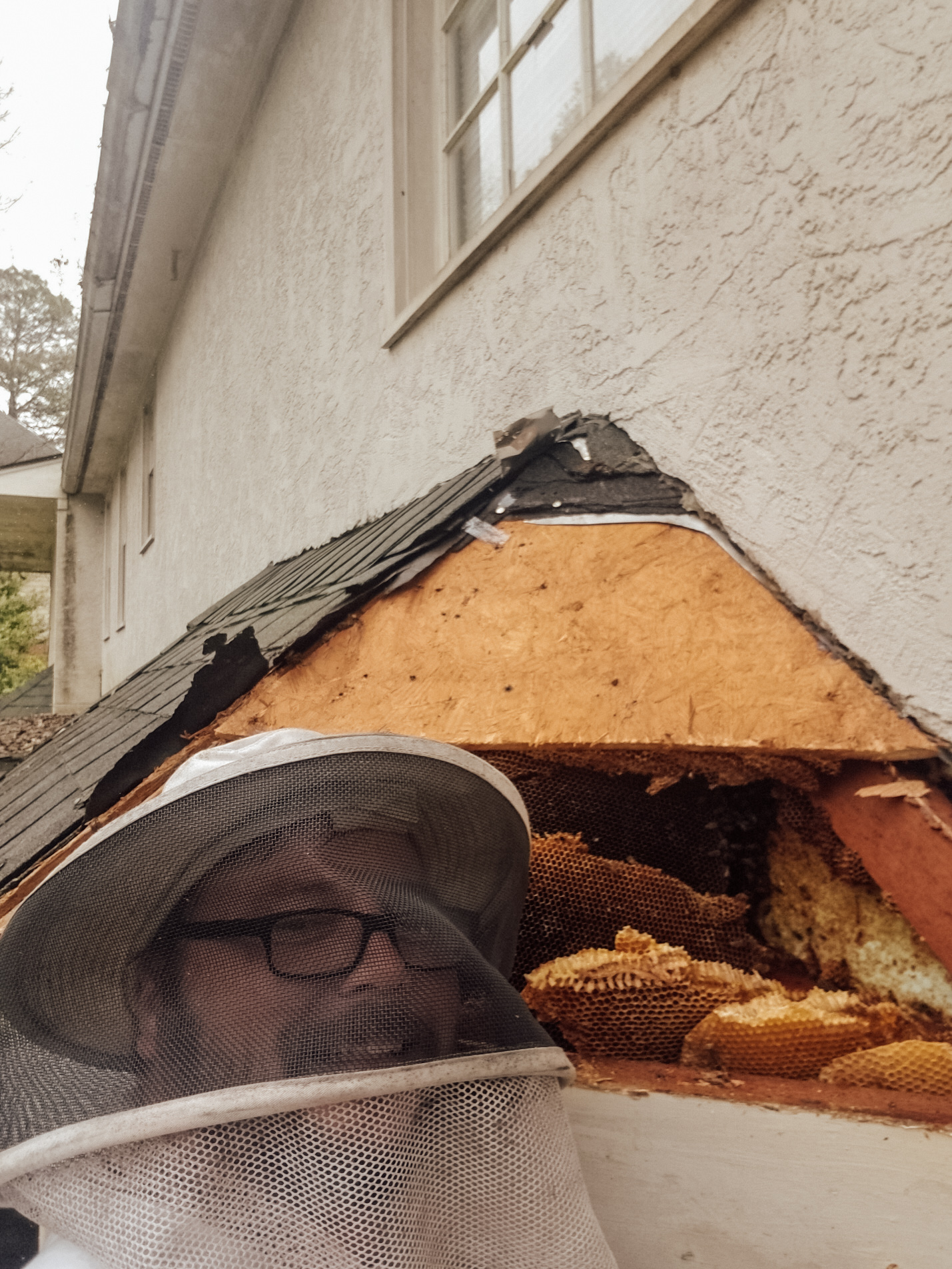
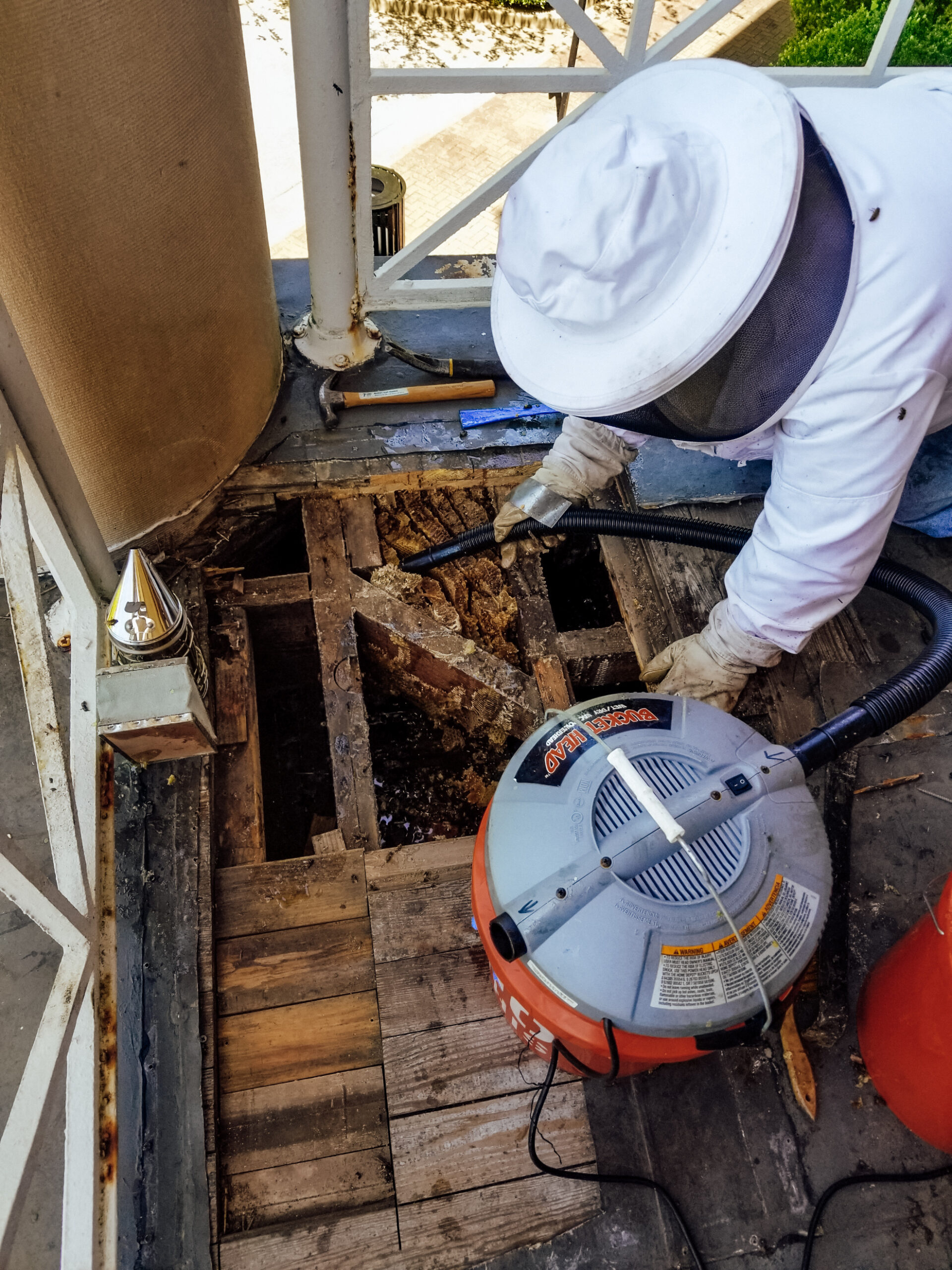
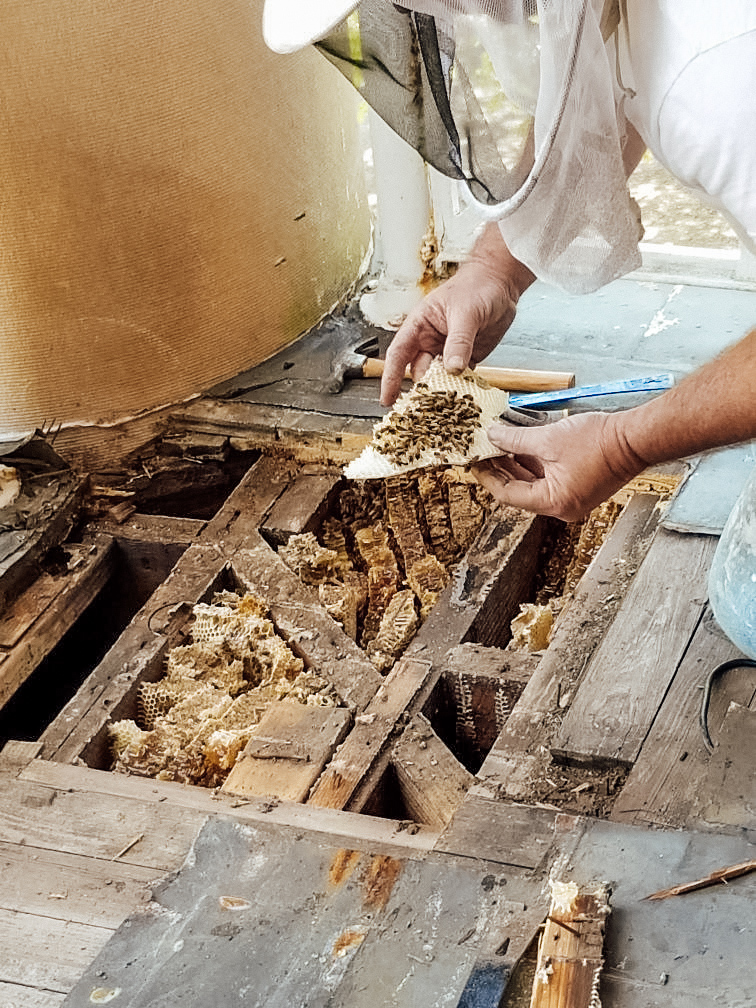
While the bees often represent some value, especially to us as beekeepers, Cut-outs require a significant amount of time and expertise to do correctly. We are dealing with stinging insects, often in difficult-to-reach places, and often in the heat. Additionally, honeybee removal services are regulated, which requires time and expense to gain and stay in compliance with the State. For these reasons, we can not provide the service for free.
Whenever possible, the bees are relocated to one of our bee yards where they can do what they do, being well cared for and without causing problems for property owners.
Yes, that just comes with the territory 🐝
If the property owner has not sprayed the colony, we can use the honey to feed the bees. Because the history of the hive is often unknown, we do not sell any honey gathered during a removal to the public.
No. We can refer you to one of our pest control partners for those services.